Roof Leak Repair London: Step-by-Step Guide to Fix Leaks Safely
- LondonRoofingInfo
- 6 days ago
- 5 min read

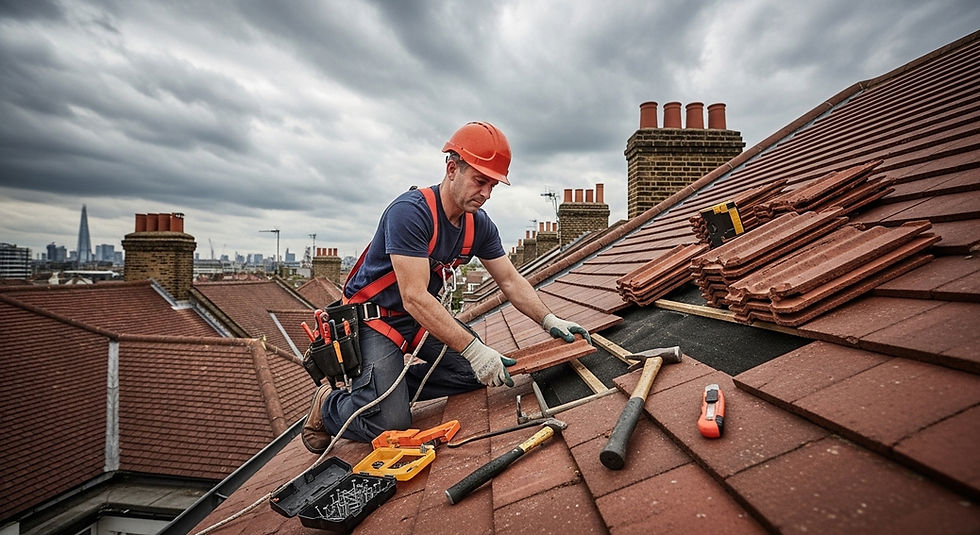
If you’re dealing with a roof leak repair in London situation, you’re already in a high-risk zone. In a city like London, where rain is frequent and often unpredictable, even a minor leak can silently turn into serious water damage, structural issues, and long-term property deterioration.
Here’s the truth most people don’t realize:A roof leak is rarely just “a hole in the roof.” It’s usually the result of multiple small failures happening over time, materials aging, drainage failing, or installation flaws. This guide doesn’t just tell you what to do, it walks you through how professionals actually approach roof leak repair, so you don’t make expensive mistakes.
STEP 1: Understanding What a Roof Leak Really Is (Before You Touch Anything)
Before you even try to fix anything, you need to understand what you’re dealing with. A Roof Leak is not always where the water is dripping. Water can enter at one point and travel along beams, insulation, or internal surfaces before it becomes visible inside your home.
This is why many homeowners in areas like Hackney or East London fix the wrong spot, and the leak comes back. When you notice a stain on your ceiling, what you’re seeing is the endpoint, not the entry point. That’s the first mindset shift: You are not fixing a spot, you are tracing a path.
STEP 2: Tracing the Leak Internally
Now you start from inside the property, not the roof. Look carefully at the affected area. If the ceiling has a brown or yellow stain, press lightly around it. If it feels soft or swollen, moisture has already penetrated the structure, which means water damage has been developing over time, not just during one rain.
If you have attic access, this becomes much easier. Inside the attic, you’re looking for signs like damp insulation, darkened wood, or even a slight shine on surfaces where water has travelled. Sometimes, you’ll also notice a musty smell. That’s not random, it’s early-stage Mould Growth, and it confirms the leak has been active for a while. At this stage, you’re not fixing anything. You’re building a map of the leak path.
STEP 3: Observing the Leak During Rain (The Most Accurate Diagnosis)
The best time to identify a leak is when it’s actually raining. When rainwater is actively entering, you can trace movement much more accurately. You might see dripping, or even a slow-forming line of moisture along beams.
This step is critical in fix roof leak London situations because London’s rain patterns often expose weaknesses in roofing systems that aren’t visible during dry conditions. If you skip this step, you’re basically guessing.
STEP 4: Moving to the Roof – What You’re Really Looking For
Once you’ve traced the internal path, you move outside, but not blindly. Now you already have an idea of the leak’s direction, so you inspect the corresponding roof area.
What you’re looking for depends on the roof type. On pitched roofs, the most common issue is broken or displaced tiles. Even a small gap is enough for water to enter. Around chimneys or vents, the problem is usually flashing, metal seals that degrade over time.
On flat roofs, which are extremely common in East London properties, the issue is often surface wear. Materials like EPDM Rubber Roofing or Torch-On Felt Roofing can crack, blister, or separate, allowing water to seep through slowly. At this point, you’re confirming the entry point of the roof leak.
STEP 5: Controlling the Situation (Emergency Handling)
If water is actively entering, your priority is not repair; it’s damage control. Inside the house, you contain the leak. Buckets, towels, and moving furniture aren’t just basic actions; they prevent the spread of water damage, which can double your repair cost if ignored.
Outside, if accessible and safe, covering the affected area with a waterproof tarp helps reduce water entry. This is what’s known as a temporary fix for roof leak UK, and it buys you time. But here’s the reality: Temporary fixes are not solutions. They are delay tactics.
STEP 6: Bringing in Professionals (Where Most People Delay and Lose Money)
This is the step where most homeowners try to save money, and end up spending more. If the leak is anything beyond a minor visible crack, you need a professional assessment. A proper Roof Inspection goes far beyond what you can see.
Experts check for:
Hidden moisture trapped under roofing layers
Structural weakening
Drainage failures
This is where companies like Camelot Roofing Solutions come in with roof repair services. They don’t just patch, they diagnose.

STEP 7: Understanding the Actual Repair Process
Once the issue is identified, the repair depends on the root cause. If the problem is tile-related, the fix is straightforward: replacement and resealing. But if the issue involves flashing, it may require partial removal and reinstallation.
Flat roofs are more complex. Under Flat Roof Repair, professionals may reseal membranes, reinforce weak areas, or even replace sections entirely. Materials like GRP Fibreglass Roofing are often used for durability in long-term solutions. This is where real roof repair services London quality matters. Cheap fixes fail fast.
STEP 8: Why Costs Vary (And Why Cheap Work Fails)
Many people search for leaking roof repair cost UK, expecting a fixed price, but that’s not how it works. A minor leak might cost a few hundred pounds, but if water has already damaged insulation or structure, costs rise quickly. The real cost isn’t the repair, it’s how long you waited before fixing it.
STEP 9: The Critical Decision – Repair or Replace
This is where logic matters more than money. If your roof has a single, isolated issue, repair is enough. But if leaks are recurring or spread across multiple areas, you’re dealing with system failure.
At that point, replacing sections or even the full roof is cheaper long-term than repeated repairs. Most roof damage repair cases in London become expensive because homeowners delay this decision.
STEP 10: Preventing Future Leaks
Fixing a leak without prevention is like solving half the problem. In London’s climate, roofs need regular maintenance. Gutters must stay clear, small cracks must be repaired early, and inspections should be routine, not reactive. This is how you avoid needing emergency roof repair in London again.
Conclusion
A roof leak repair issue should never be delayed. What starts as a small Roof Leak can quickly turn into serious Water Damage if not handled correctly. The key is identifying the real cause, applying the right fix, and avoiding temporary solutions that fail over time.
For reliable results, a professional Roof Inspection and expert repair from trusted companies like Camelot Roofing Solutions ensures the problem is solved properly, not repeatedly.
FAQs
What is the most common cause of roof leaks in London?
The most common cause of roof leak repair cases in London is damaged or missing tiles, followed by faulty flashing and blocked gutters. In many London properties, especially older homes, ageing materials and constant exposure to rain also contribute significantly to leaks.
When should I replace my roof instead of repairing it?
If your roof has multiple leaks, severe water damage, or is more than 20 years old, replacement is often more cost-effective than repeated repairs. A professional inspection can help you make the right decision.
How much does roof leak repair cost in London?
The cost of leaking roof repair cost UK varies depending on the severity. Minor repairs may cost around £150–£400, while more complex issues like flat roof damage or structural repairs can go beyond £1,500. The longer the issue is ignored, the higher the cost becomes.
Can I fix a roof leak myself?
You can apply a temporary fix, such as using sealant or a waterproof tarp, but this is not a permanent solution. A proper repair requires identifying the exact source of the roof leak and addressing underlying issues, which usually requires professional expertise.


Comments